The Spud Standard: Potato Buns Have Won the UK Burger War — and Here's Where They're Getting It Right
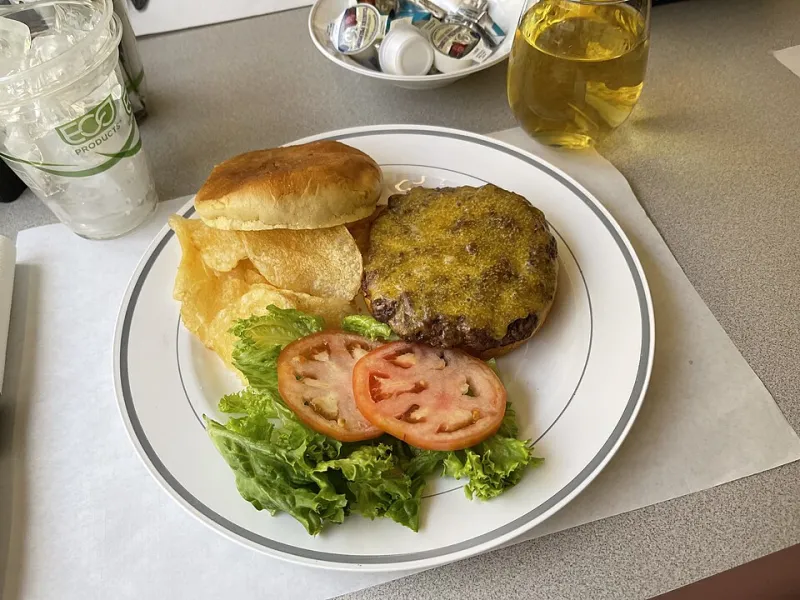
Photo: Missvain, CC BY 4.0, via Wikimedia Commons
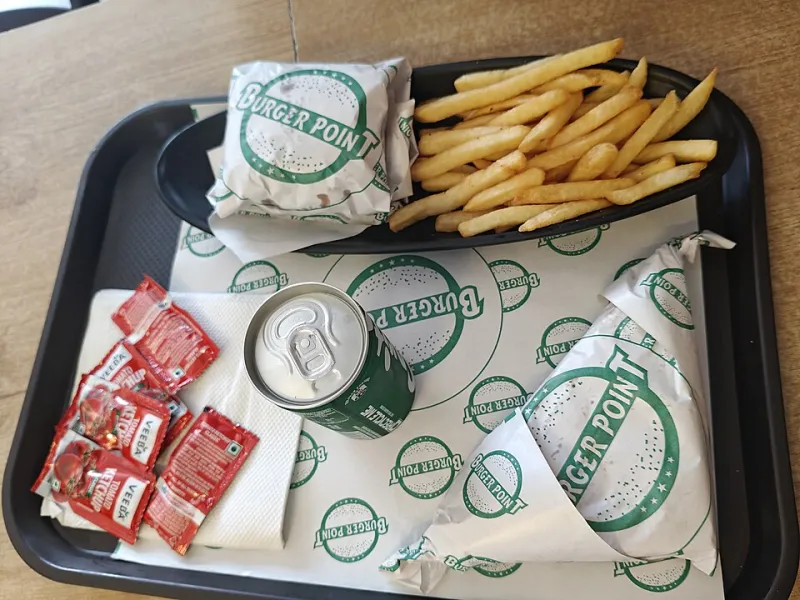
Order a burger in any UK city in 2026 and there's a decent chance the bun has been quietly swapped on you. No announcement, no fanfare — just a softer, slightly squatter, faintly savoury number where a glossy brioche crown used to sit. The potato bun has taken over, and honestly, it's about time.
This isn't another trend piece about bread. This is about the thing that decides whether your £14 burger survives contact with sauce, grease and a queue that ran twenty minutes long. The bun is not a delivery mechanism. The bun is the difference between a good burger and a puddle.
What Actually Makes a Potato Bun Work
A good potato bun does three things at once. First, it's tender without being flimsy — potato starch and a high-hydration dough give a soft, close crumb that compresses under your fingers instead of shattering. Second, it's slightly savoury, so it doesn't compete with the patty for sweetness. Third, it has a thin, barely-there glaze on top and a flat base that toasts on the cut side rather than burning.
The practical upshot is structural. A potato bun absorbs sauce without going to mush, grips a wet patty without sliding, and keeps its shape right down to the last bite. It also splits cleanly, which sounds trivial until you've watched a brioche lid disintegrate into a pile of golden crumbs halfway through a dirty burger.
There's a reason the technique crossed over from East Asian baking. Milk bread and its relatives gave UK burger kitchens a lesson in softness that doesn't sacrifice strength — squishy, but with a spine.
Brioche, We Need to Talk
Let's be fair to brioche. It had a magnificent run. For about a decade it was the signifier of a "proper" burger: tall, shiny, eggy, a bit French. It looked superb in photographs, which was broadly the problem.
Because brioche is essentially a sweet enriched bread doing a savoury job. All that butter and sugar crowds the beef, the crumb is loose enough to crumble on first bite, and the sweetness clings to your palate in a way that makes the second half of the burger taste flatter than it should. And when the patty is juicy — which we'd all prefer — the base soaks through and the whole enterprise goes structurally bankrupt around bite four.
None of which means brioche is banned. A restrained brioche with a low sugar content can be excellent. But as a default? It's spent a decade coasting on good lighting.
The Bun-to-Patty Ratio, Briefly
Before the hit list, some honest rules of thumb. The bun should be wide enough that the patty never looks like it's falling out of a too-small hat — roughly 1.15 to 1.3 times the patty's width. Height should be modest: if the lid is thicker than the total protein stack, you've bought a sandwich with ideas above its station. And the base must be toasted on the cut side only, so it forms a moisture barrier without turning into a crouton.
Get those three things right and the rest is detail. Get them wrong and no amount of beef pedigree will save you.
The Hit List: Where the Ratio Holds
London and the South East
Tollgate Burger, Peckham — The bun comes from a small Bermondsey bakery and it's the star of the show: squished pale gold, thin glaze, splits without a single crumb escaping. The double is the right order here, because the bun can actually take it.
Bun Dept, Walthamstow — Shamelessly bread-forward, and all the better for it. They bake in-house, and the potato bun has a faint tang from a long ferment that lifts the pickles and cheese no end. Weekend queues are real; go early.
The South West
Harvest & Grind, Bristol — West Country beef, and a bun that's been pressed flat before toasting so the base sits flush with the plate. Sensible, unfussy, and the only place in the region we've found where the last bite is as good as the first.
Salt Pig Burgers, Falmouth — A seaside operation with an appropriately robust bun. Sea air and grease are unforgiving; this one holds. The single is the better-balanced order.
The Midlands
Foundry 44, Birmingham — A proper industrial-grade feeding operation. The potato bun is thick-cut like a sandwich loaf, which sounds like a red flag and somehow isn't, because the beef is big enough to match it.
Cob & Crumb, Nottingham — Comes at this from the bakery side and it shows: beautiful crumb, slightly too much of it on the top half. Ask them to press it. They will, without sighing.
The North West
Didsbury Double, Manchester — The best ratio we've found anywhere in the north. The bun is barely wider than the two patties and sits low, so nothing slides. Textbook.
Mersey Meat Co., Liverpool — Hearty, generously sized, and the only bun on this list with a decent amount of chew. A proper northern bun, if such a thing exists.
Yorkshire and the North East
The Patty Rooms, Leeds — Soft, warm, delivered in a basket and finished with a brush of beef fat on the cut side. Slightly extravagant, entirely correct.
Grainger Grind, Newcastle — A squishy milk-bread take on the potato bun that verges on too soft but just about holds its nerve. Order the Bacon Combo and thank us later.
Scotland and Northern Ireland
Leith Larder, Edinburgh — Small, dense, faintly nutty, and it makes the beef taste bigger than it is. Rare skill, that.
Barley & Beef, Belfast — Bakes its own and toasts on a plancha rather than a toaster, which gives the cut side a properly savoury crust. Worth the trip to the Cathedral Quarter.
Wales
Canton Curl, Cardiff — A soft milk bun doing a very convincing potato-bun impression: sweet-adjacent but not sweet, and it survives a wet slaw with dignity. The Sunday queue is a local institution.
How to Judge a Bun in Ten Seconds
Squeeze it gently. If it springs back, good. If it stays compressed, it'll go soggy. Look at the split: clean cut, lightly toasted, no butter pooling. And check the edges — a bun that overhangs the patty by more than a centimetre on each side is going to give you a mouthful of nothing at the end. That's the bit nobody photographs and everybody notices.
The Verdict
Brioche will survive. It's too photogenic to disappear entirely, and there's a time and a place for a glossy crown — usually a brunch menu. But in 2026 the default has shifted, and it's shifted for the right reasons: strength, restraint and a bun that knows its job is to get out of the way of the beef.
If your local still serves a sweet, crumbly, oversized brioche with a patty built for a smaller bun, that's not a burger problem. That's a bread problem. And now you know where to go instead.