Ordering From Memory: Eight Lost UK Burgers the Menu Board Still Owes Us
Menu boards are graveyards with better lighting. One week a burger is everywhere — poster in the window, limited-time badge, a sauce name that sounds like an indie band — and the next it is gone. No funeral. No farewell tour. Just a gap where your order used to be.
We are not here to demand a resurrection. Well, not only. The more interesting question is what these eight lost burgers got right, and why today's chains and independents keep relearning the same lessons in public. In 2026 the UK burger scene has more tools than ever: better buns, sharper pickles, smarter sauces. And yet the ghost menu still nags. Here is the ranking, from the merely missed to the genuinely mourned.
8. McDonald's CBO — the crispy onion blueprint
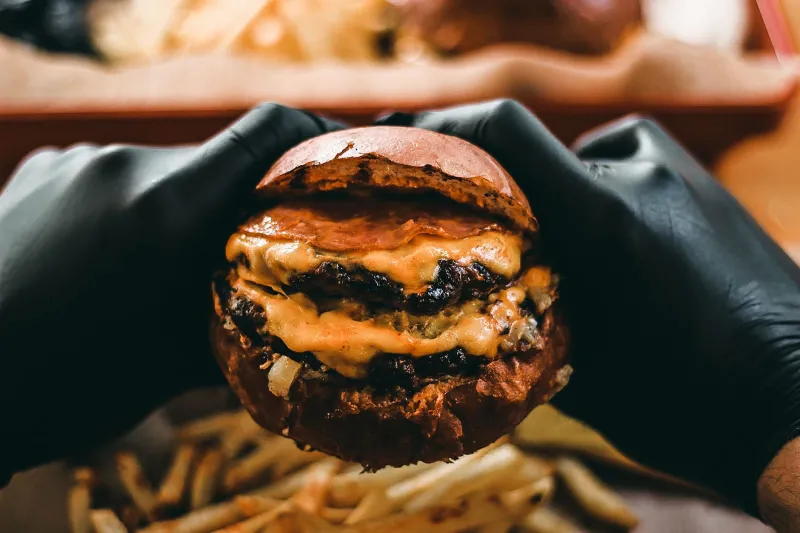
The Cheddar Bacon Onion was a Big Mac-adjacent build with a proper savoury swing: white cheddar sauce, bacon, and those crispy onions that added a shard of texture. It was not fancy. It was not meant to be. But it understood that a burger needs contrast, not just layers. Today's menus are full of onion rings and onion relish; few deliver that dry, brittle snap. Bring back the idea, not necessarily the badge.
7. The 1955 Burger — smoke, salt and a name that did the work
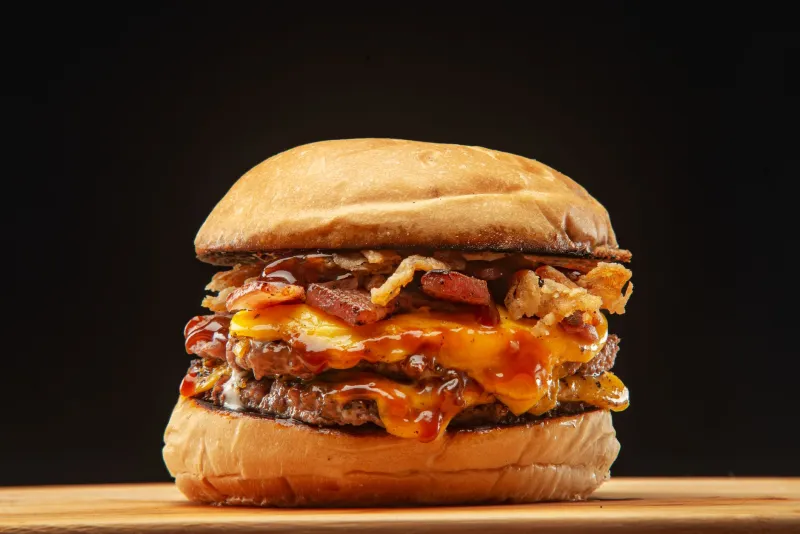
This was a barbecue burger that tasted like barbecue rather than sweet ketchup with a marketing budget. Smoky sauce, bacon, crispy onions, a sesame bun: simple parts, clear intent. The lesson is about flavour thesis. A limited-edition burger should be able to explain itself in one sentence. 'Smoky' is a thesis. 'Ultimate' is a shrug.
6. Burger King's Angry Whopper — heat with a point of view
The Angry Whopper had jalapeños, a pepper-spiked sauce and enough of a kick to make you sit up. It was daft, but it was daft with direction. Today's spicy burgers often chase Scoville numbers and forget that heat is also an aroma and a texture. The Angry Whopper understood that spice should make the next bite taste different, not just louder.
5. KFC's Zinger Tower — the double-decker that made sense
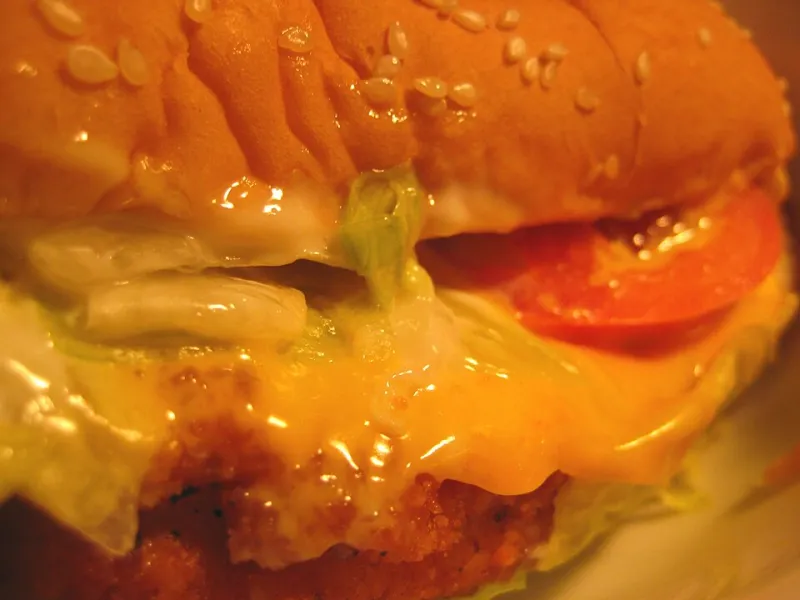
A hash brown in a burger is a structural joke that should not work. The Zinger Tower made it work because the hash brown gave crunch and the mayo gave slickness, and the chicken fillet held the whole thing together. The lesson: a tower burger needs engineering. Stack height is not the same as generosity. If the bottom bun is a soggy afterthought, the tower is just a mess with ambition.
4. McChicken Premiere — the ciabatta era
The Premiere felt like a pub lunch in a paper wrapper: ciabatta-style bun, chicken fillet, bacon, cheese, smoky sauce. It was not the most refined thing on the high street, but it had chew and crust and a bit of self-respect. The lesson is about bread. A bun with texture can make a chicken burger feel like dinner rather than a snack. Today's brioche default is soft and sweet; sometimes we need a bun that fights back.
3. KFC Double Down — the dare
Bacon and cheese between two chicken fillets. It was ridiculous, and that was the point. But it also had a clean idea: not a burger with extra stuff, but a category joke executed properly. Today's stunts could learn from that discipline. Novelty works when it can be explained in a sentence and delivered without apology. The Double Down never pretended to be a salad.
2. McRib — the masterclass in scarcity
The McRib is not the best sandwich in the world. It is a masterclass in menu theatre: it arrives, it leaves, it becomes a memory. The pork patty, the barbecue sauce, the pickles and onions — it is a distinct flavour profile, not beige with a badge. The lesson: scarcity is a tool, but it only works if the product has a personality. People do not queue for vague.
1. The Dirty Burger from Meatwagon — the one we actually mourn
A van, a paper wrapper, a smashed patty, cheese, pickles, sauce. It was messy in the right way: fast, hot, and built to be eaten standing up. The best burgers are not the tallest or the most complicated. They are the ones where every element has a job. Today's independents could learn from the restraint: fewer ingredients, better heat, faster service, more napkins. The Dirty Burger was not trying to be a destination. It was trying to be lunch. That is why we still remember it.
What the lost menus teach us
Texture is not a garnish
Crispy onions, hash browns, pickles, a bun with crust: these are not decoration. They are the difference between a burger you finish and a burger you endure. The lost menus were full of texture because they were built for eating, not for photographs.
Scarcity works, but only with substance
Limited runs are everywhere now. Most of them are just a new sauce and a countdown timer. The McRib and the Double Down worked because the product was genuinely different. If the burger is forgettable, the scarcity is just admin.
Price the memory honestly
Nostalgia has a ceiling. We miss these burgers because they were good value for what they were: a treat, not a ceremony. In 2026, a £20 burger has to earn every penny. The ghost menu reminds us that generosity is not the same as luxury.
We will not get all eight back. That is fine. The point is not nostalgia for its own sake. The point is that the UK burger scene in 2026 has more tools than ever and still sometimes forgets the basics. The ghost menu is not a demand. It is a checklist.