The Ball Never Touched the Steel: 30 Smash Burger Claims, Priced and Prosecuted
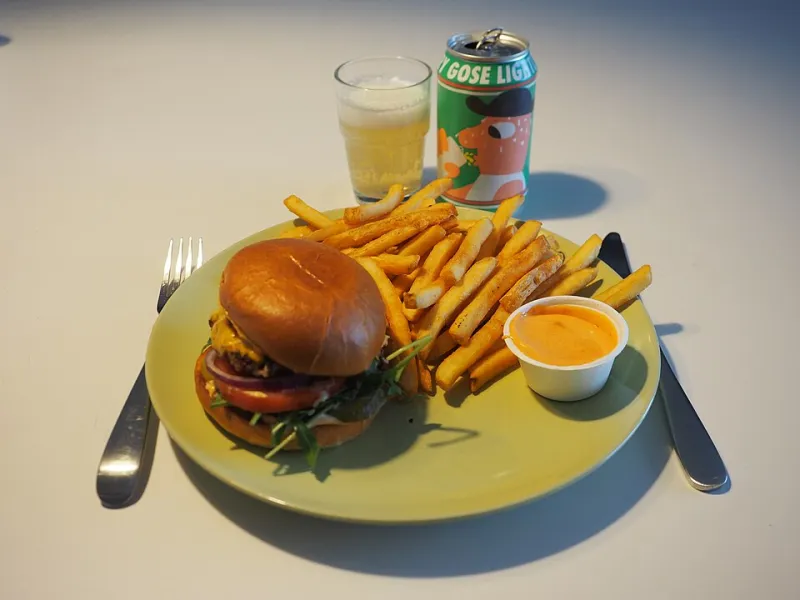
Photo: JIP, CC BY-SA 4.0, via Wikimedia Commons
Thirty menus. Thirty promises. One question: did a ball of beef ever actually hit the steel?
The smash burger has become the most misunderstood phrase on the British burger menu. It used to mean something precise — a loose ball of coarse-ground beef slammed onto a screaming flat-top with a heavy press, held there for a second, then left alone so the crust could set. In 2026 it mostly means “flat”. A pre-formed disc, laid gently onto a griddle, flattened a bit with the back of a fish slice, and sold for £11.50 on a board with SMASH chalked on it in a font that's meant to look like a warehouse.
We spent ten weeks and a genuinely upsetting amount of money visiting 30 UK spots that advertise smash patties. Here's who's actually doing it, and who's just selling you a squashed puck.
The four tests
Every burger was judged on four things, because four is enough to separate technique from theatre.
Crust. A real smash gives you a dark, almost lacquered surface with visible lacy bubbles. If the patty comes out uniformly grey-brown and smooth, nobody pressed anything with any conviction.
Edge lace. That frilly crisp border where beef escaped the press and met steel on its own terms. It's the signature, the fingerprint, the whole point. No lace, no smash.
Press timing. Was the ball pressed within seconds of hitting the griddle, while the surface was still cold and the fat still solid? Or was it flattened halfway through cooking, once the crust had begun to set? That second method is exactly how you end up with something that eats like a squashed burger dressed up in smash clothing.
Ball-to-steel. Not negotiable. Did a ball exist at all? We watched. We asked. Two kitchens cheerfully admitted their patties arrive pre-pressed from a supplier and get “smashed” in the sense that they're flattened again. That's not smashing. That's a second pressing, and the beef knows the difference even if the menu doesn't.
The imposters
Nine of the 30 failed outright. The worst was a Kentish gastropub with a beautiful feed and a £14.50 “double smash” that turned out to be two discs so perfectly circular they looked die-cut. No lace. No crust. Plastic cheese doing all the emotional labour, and doing it well, because it always does.
Three London sites had built entire identities on the word and were, on inspection, running pre-formed patties through a belt grill and finishing them on a flat-top for colour. The colour arrived. The flavour didn't. You cannot fake the edge you get from raw beef hitting properly hot steel. You can approximate it, and the approximation tastes like a hotel breakfast.
There's a fourth failure that's harder to be angry about: the over-smash. Pressed to within a millimetre of its life, the patty goes from crisp to brittle and the middle dries out before the edges catch. Three spots did this. You could hear the crunch from the far side of the room, which sounds like praise and absolutely isn't.
The genuine smashers
Nine got it right, and they had habits in common rather than recipes.
They use coarse-ground beef with fat north of 20%. They keep the balls loose and cold — one Leeds kitchen pulls six at a time from a fridge drawer and no more, so nothing sits out sweating. They press with a heavy press, not a spatula. They press once, hard, then leave the thing alone for the full cook. And they scrape with a stiff scraper, taking the crust and a little of the griddle seasoning with it, which is where the flavour actually lives.
The best patty we ate all autumn was a £4.50 single under a Bristol railway arch: 55g of beef pressed so thin you could read the specials board through it, edges like a paper doily, one slice of cheese melted into the lace. It beat 27 of the “double smash” burgers we paid three times as much for.
Runner-up was in Glasgow, and it arrived with a printed warning about the noise. Fair warning. Fair burger.
What the prices give away
Here's the pattern, and it isn't flattering. The nine genuine smashers averaged £8.90. The nine imposters averaged £13.20.
Smashing is cheap. It's a technique for making a small amount of beef eat like a large amount of beef. The moment a kitchen starts charging premium money for it, they're usually paying for something else: the room, the branding, the photographer. If a smash burger costs more than £12, ask what you're getting beyond two patties. If the answer is “two patties”, ask again.
How to spot one before you order
Look at the photos. Real smash burgers look messy and irregular, with dark edges and a translucent frill. Fake ones look tidy and round, with cheese applied like a sticker.
Ask what the patty weighs before cooking. Anyone doing it properly knows instantly — 50g to 70g, pressed thin, because that's the only size that crisps through in under two minutes.
And listen. A proper smash announces itself: a hiss and a spatter, not a thud. If you can't hear the kitchen from the till, you're probably in the wrong queue.
The verdict
Nine out of 30. A 30% hit rate on a word that used to mean a specific, physical, slightly violent thing. The good news is that the real operators are easy to find once you know the tells, and they're mostly cheaper than the fakes. The bad news is that “smash” is now doing the job “artisan” did in 2012 — pure marketing, no steel required.
Smashed, or just squashed? Ask for the lace. It never lies.